
Improving Charger Utilization and Customer Dwell Time at Retail Sites
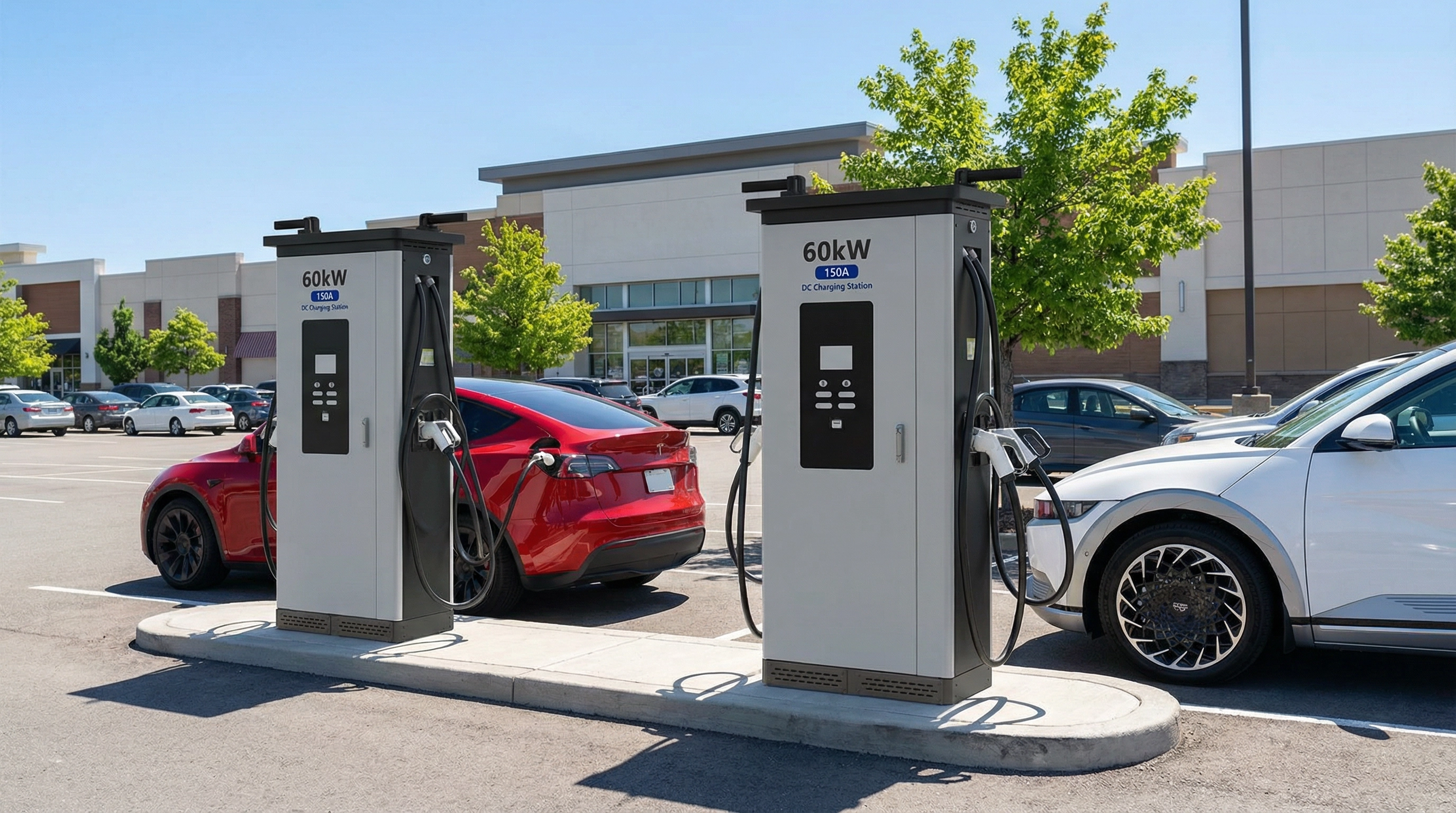
Retail charging sites can improve charger utilization by matching charger types with customer visit patterns, using smart charging management, and designing retail experiences around EV dwell time. Sites with optimized layouts can raise utilization from typical 15%–25% levels to more than 40%, while increasing customer engagement during 30–90 minute charging sessions.
Electric vehicle charging at retail locations has changed from a simple parking service into a commercial facility feature. By 2025, global EV sales had continued expanding, with more than 17 million electric vehicles sold in a single year according to industry reports. As EV ownership grows, retail operators are facing a practical question: how can charging equipment generate stronger usage while fitting naturally into customer shopping habits?
Many retail charging sites still experience uneven charger usage. A location may have high demand during evenings or weekends but remain underused during other hours. Industry data shows that average public charger utilization often remains around 15%–25%, while well-planned commercial charging locations can reach utilization rates above 35%–40%. The difference usually comes from charger placement, charging speed selection, customer traffic analysis, and site management.
Customer dwell time provides an important opportunity for retail businesses. Traditional fuel stops often last less than 10 minutes, while EV charging sessions commonly range from 20 minutes to more than 1 hour. A shopping center customer charging at a 7–22 kW Level 2 charger may spend 45–120 minutes inside nearby stores, restaurants, or entertainment areas.
A retail charging site should match charging duration with customer activity instead of focusing only on maximum charging speed.
The choice of equipment has a direct impact on utilization. Installing high-power chargers at every retail location is not always the best approach. A convenience store near a highway may benefit from 150 kW–350 kW DC fast chargers because drivers usually want short charging stops. A supermarket or shopping mall may achieve better performance with Level 2 chargers because customers already plan longer visits.
Retail operators evaluating business EV charger options usually compare several factors before selecting equipment. The following factors influence long-term performance:
| Site Type | Recommended Charger Type | Typical Customer Stay |
|---|---|---|
| Highway retail center | DC fast charger | 20–40 minutes |
| Supermarket | Level 2 charger | 45–90 minutes |
| Shopping mall | Level 2 + selected DC fast chargers | 60–150 minutes |
| Restaurant area | AC charging or medium-speed DC charging | 30–90 minutes |
Charger placement inside a retail property also affects customer behavior. Chargers located far from entrances or in areas with poor visibility often receive lower usage even when the equipment quality is high. Site planning studies show that convenient parking locations can increase charging participation by approximately 20%–30% compared with poorly positioned charging spaces.
The surrounding commercial environment also influences charging frequency. A charger near grocery stores, coffee shops, cinemas, gyms, and restaurants provides more reasons for customers to remain on-site while their vehicles charge. Retail locations with multiple customer activities usually achieve better charger occupancy because charging time overlaps with normal shopping routines.
Once charger selection and placement are completed, operational management becomes important. Smart charging platforms allow operators to monitor charger status, energy consumption, session duration, and user demand patterns. Data collected from charging networks can help identify peak periods and adjust pricing or availability strategies.
A poorly managed charger can lose significant operating time because vehicles may remain parked after completing charging. Research from public charging networks indicates that unnecessary parking occupancy can account for approximately 20%–40% of charger availability loss at some locations. Automated notifications, parking policies, and reservation systems can reduce this issue.
Real-time charger information helps customers choose available equipment and helps operators maintain better site performance.
Pricing strategies also influence charger usage. Some retail charging operators use time-based pricing, peak-hour pricing, or membership discounts to balance demand throughout the day. For example, lower charging rates during off-peak periods can encourage flexible customers to charge at less crowded times.
Retail businesses can also connect charging activity with customer programs. A supermarket may provide charging credits through loyalty memberships, while restaurants may offer discounts for customers charging during meals. These approaches encourage EV drivers to spend more time at the location rather than treating charging as a separate activity.
Energy management becomes increasingly important as charging installations expand. A site with 20 fast chargers can create significant electricity demand when multiple vehicles charge simultaneously. Without power management, electricity costs may increase because of higher peak demand.
Many commercial charging locations now combine smart energy controls with renewable energy systems and battery storage. These solutions can reduce electricity pressure during busy periods. In some commercial deployments, managed charging programs have reduced peak electricity demand by more than 10%–20% while maintaining customer charging availability.
The financial performance of retail charging depends on more than charging fees. Operators increasingly evaluate charging sites through multiple business outcomes:
| Measurement Area | Example Indicator |
|---|---|
| Charger performance | Sessions per charger per day |
| Customer activity | Average retail visit duration |
| Energy management | Peak demand reduction percentage |
| Customer engagement | Repeat charging visits |
| Site efficiency | Charger occupancy rate |
Retail charging also creates new customer behavior patterns. EV drivers often spend more time at locations where charging is available. A 2024 commercial mobility survey found that many EV users preferred shopping destinations offering charging facilities, especially when charging was combined with restaurants or other services.
Artificial intelligence and forecasting tools are becoming more common in charger management. Operators can analyze historical charging records, local traffic conditions, weather information, and seasonal demand changes to estimate future charger requirements. For example, a retail site can use previous holiday charging data from 2025 to adjust charger availability during major shopping periods.
The expansion of EV charging will continue to change how retail locations use parking areas. Instead of treating charging spaces as isolated parking equipment, businesses are developing integrated mobility services where charging, shopping, energy management, and customer experience work together.
Retail charging success depends on using the right charger type, placing equipment where customers naturally spend time, and managing the site with accurate operational data.
As EV adoption increases through the late 2020s, retail locations that combine charging infrastructure with customer-focused services will be better positioned to attract EV drivers and improve the utilization of their charging assets.